Year 8 Program
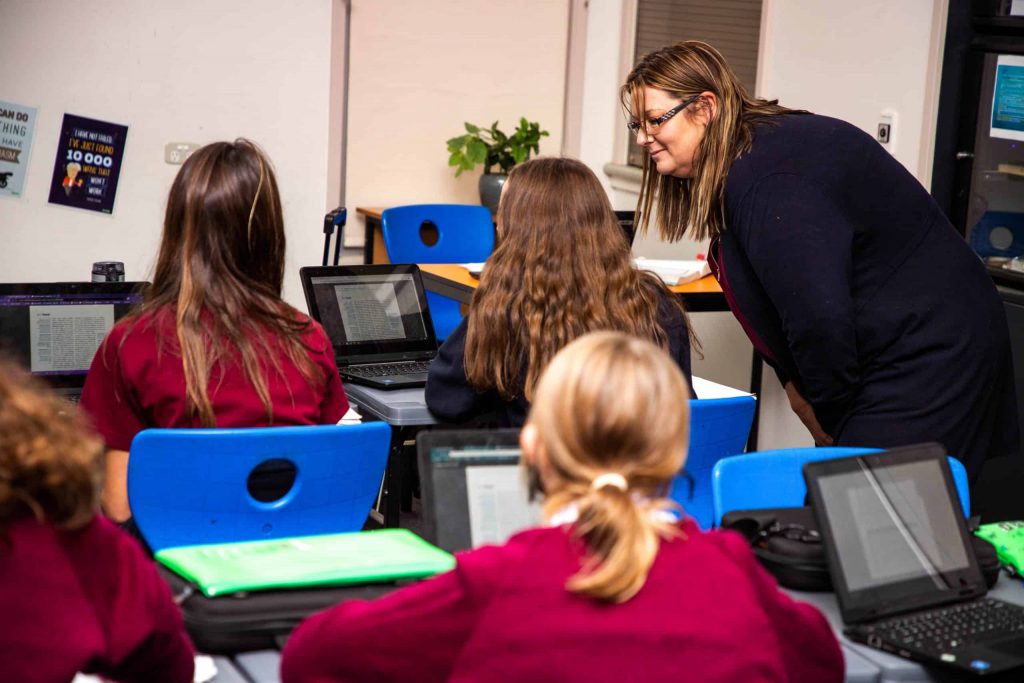
Foster Secondary College has implemented a dedicated Year 8 Program. The program is based on the DET’s (Department of Education & Training) implementation of the Victorian Curriculum F-10 initiative in Teaching and Learning. Our Year 8 Program continues to promote student contribution and encourages continual development of lifelong learning behaviours.
Year 8 is a transformative year. It’s exciting but also one of significant developmental change which may call for guidance. The Year 8 Program seeks to develop strategies for raising achievement and transforms learning to improve student engagement. Providing students with a broad range of learning experiences including semester based opportunities, we aim to develop our students as lifelong learners across multiple areas.
Foster Secondary College acknowledges the importance of Literacy and Numeracy; therefore the Year 8 Program provides more time in Maths & English, and implements intervention programs based on specific needs.
Year 8 Hand Book
A definitive factor in creating the Year 8 Program was a conscious desire to promote student involvement in the community. This means their College Community and also local, regional, national and global. Through the Broadening Horizons Program, students have contributed to a number of local projects, including work with Parks Victoria Rangers from Wilsons Promontory National Park.
The Year 8 Program recognises that students aspire to a variety of pathways in their future, and tries to prepare individuals with the necessary skills, including teamwork skills and leadership skills. The program seeks to assist students in acquiring a broad knowledge of themselves as learners and people.
Curriculum
The whole year Habits of Mind – Thinking, Managing Impulsivity and Persistence
Term 1: Main Foci-
- Learning to Learn
- Elect Ambassadors and SRC reps
- Integrating Theme – Exploration – Is there anybody out there?
Term 2: Main Foci-
- Working Collaboratively
- Elect Peer actively leaders
- Integrating Theme – History – Mediaeval and Indigenous
Term 3: Main Foci-
- Differentiation
- Integrating Theme – Healthy Living
Term 4: Main Foci-
- Persistence and Assessment
Students are required to read and respond to texts in a variety of ways. They develop fundamental skills in an array of forms and styles, including analytical, informative and instructional modes of writing. Additionally, students improve their control and comprehension of the English language, and other tasks designed to foster independent learning. Students engage in regular Writing Journal sessions, exploring form, purpose, audience and text type. Home study expectations include: reading and the completion of written tasks.
Semester 1
Topics covered during semester 1: Integers, Geometry, Fractions, Decimals, Percentages and Measurement. Problem solving and calculator skills have been developed within these topics.
Semester 2
Topics covered during semester 2: Measurement, Geometry, Rates and Ratios and Probability. Problem solving and calculator skills have been developed within these topics.
Note that not all achievement standards may be covered in one semester.
Semester 1
Science focuses on developing skills and knowledge in Science. Topics covered include States of Matter, Elements and Compounds, Cells as the basic units of all living things. Students completed practical investigations, scientific reports, projects and tests.
Semester 2
Science focuses on developing skills and knowledge in Scientific endeavours.
Topics covered include Sedimentary, Igneous and Metamorphic rocks, Body systems, in particular the Skeletal and Digestive systems as well as Elements, Compounds and Mixtures. Students completed practical investigations, scientific reports, projects and tests.
Semester 1
Semester One of Year 8 Humanities covers the era of the Vikings (800 CE), Medieval Europe & The Bubonic Plague. Students develop skills in source analysis and complete a research project on a range of topics covering Medieval and Viking societies. Students also begin a study of Geography with a focus on landforms and landscapes.
Semester 2
Semester Two of Year 8 Humanities students complete a Geography unit on Landforms and Landscapes. Students also study Ancient China and the rise of Genghis Khan and the Mongolian Empire. They also complete a Civics and Citizenship unit covering the rights and responsibilities of being a citizen and the mechanics of the Australian parliamentary and electoral system.
Semester 1
During Semester 1 in Physical Education students participate in a variety of units including; Swimming, Athletics, Fitness Testing, Basketball, Badminton, Minor Games, Gaelic Football and Touch Football. Students developed specific skills in all units and applied these skills into game situations.
Semester 2
During Physical Education semester 2 students participate in a variety of units including; Volleyball, Table Tennis, Gymnastics, Tennis and Golf. Students developed specific skills in all units and applied these skills into game situations.
Semester 1
During semester one students dive into risk taking behaviours both during adolescents and adulthood. Topics include legal and illegal drugs, alcohol and smoking. Students Participate in a range of classroom discussions as well as assignments throughout the semester.
Semester 2
During semester two students look at mental health and wellbeing on a local, national and international level as well as looking at physical activity and why it is so important to live and lead a healthy active lifestyle. Students Participate in a range of classroom discussions as well as assignments throughout the semester.
Semester 1
Students create art by working with the study of portraiture and figurative forms, with a learning emphasis on representing specific features in both realistic and expressionistic styles. Students will be required to demonstrate they can use observational drawings and research; improve skills in using different art forms and both discuss and write about art from different cultural and historical styles.
Semester 2
Students continue to create art by working with the study of portraiture and figurative forms, with a learning emphasis on representing specific features in both realistic and expressionistic styles. Students will be required to demonstrate they can use observational drawings and research; improve skills in using different art forms and both discuss and write about art from different cultural and historical styles.
Semester 1
Learning in Digital Technologies focuses on developing skills in computational thinking and problem solving. Students are introduced to a general purpose programming language and a common set of workplace software packages to analyse and visualise data. Students learn about networks, cyber security and physical computing components.
Semester 2
Students design user experiences and algorithms incorporating branching and iterations, and develop, test, and modify digital solutions. Students evaluate information systems and their solutions in terms of meeting needs, innovation and sustainability
Semester 1
Students complete assessment tasks using the design process. This included Investigating, Designing, Producing, Analysing and Evaluating their food products. They also analysed food production methods and the impact they have on the environment.
Semester 2
In this unit students clarify their understanding of the design process and use drawing techniques to visualise design ideas. Students understand and logically sequence stages of production. Students work safely with a range of tools and equipment to produce items, evaluating and reflecting on the process and their progress.
Year 8 Performing Arts focuses heavily on creating, practising, rehearsing and performance, all the while encouraging a shared love of music and the performing arts. Students develop foundation skills on piano, voice, bass guitar, guitar and/or percussion, enabling all students to fully participate in the creation of melody, harmony, beat and rhythm. Instrumental Music students are also encouraged to use their chosen instrument as an addition to the class ensemble. This subject is heavily focussed on performance and performance techniques.
Students interact in Indonesian to exchange information about self, routines, and interests, focusing on building foundational conversational skills. They use familiar vocabulary and sentence structures to communicate, and respond to a range of spoken and written texts. Students explore Indonesian culture through activities such as creating traditional masks and reflect on the connections between language and culture, as well as differences and similarities with their own.